In the evolving landscape of energy storage, understanding what is the difference between lithium and lead-acid batteries is vital for consumers and industries alike. According to a recent report by the International Energy Agency, lithium batteries dominate the market, contributing to over 60% of global battery sales in electric vehicles by 2023. This trend underscores the shift towards more efficient technologies.
Lithium batteries provide heightened energy density, allowing for longer usage times and faster charging. In contrast, lead-acid batteries remain popular in certain applications due to their lower initial cost and established manufacturing processes. However, their lifespan and efficiency fail to match that of lithium options. A study from Battery University highlights that while lead-acid batteries may last 3-5 years, lithium counterparts can endure up to 15 years or more.
Understanding these distinctions can help navigate choices in sectors ranging from automotive to renewable energy. As we delve deeper into the characteristics of both battery types, their implications for performance, sustainability, and long-term economic viability become evident. Industry professionals continually reassess their needs, grappling with initial costs versus long-term benefits in an expanding market.
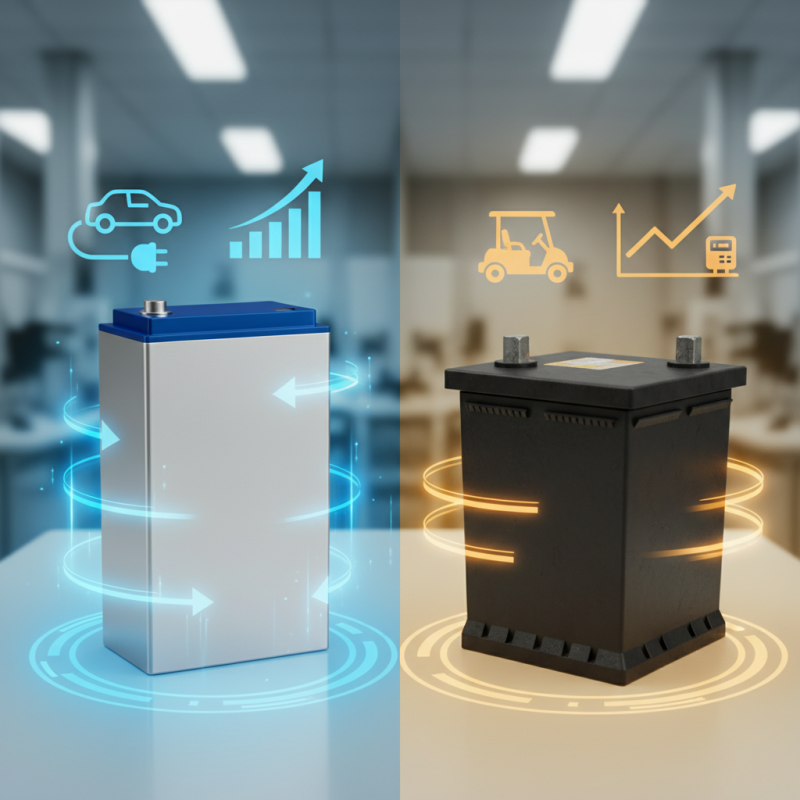
Types and Applications of Lithium and Lead-Acid Batteries
Lithium and lead-acid batteries serve various applications across different industries. Lithium batteries are widely used in consumer electronics, electric vehicles, and renewable energy systems. Their lightweight and compact design makes them ideal for portable devices. In contrast, lead-acid batteries are commonly found in vehicles, backup power, and industrial equipment. They are heavier and bulkier but offer a reliable power source for applications requiring high surge currents.
When comparing their types, lithium batteries come in different chemistries, such as lithium-ion and lithium polymer. Each type has unique traits and applications. Lead-acid batteries include flooded, AGM, and gel types, each suited for specific needs. Flooded batteries require maintenance, while AGM and gel batteries are maintenance-free and better at deep cycling. Both battery types have their pros and cons. Users must consider their specific power needs and operational environment.
Despite their advantages, both battery types face challenges. Lithium batteries can be expensive and require proper recycling. Lead-acid batteries are less efficient and have a shorter lifespan. Understanding these differences and applications is key for selecting the right battery for your needs.
5 Key Differences Between Lithium and Lead-Acid Batteries
| Feature |
Lithium Batteries |
Lead-Acid Batteries |
| Weight |
Lightweight |
Heavy |
| Energy Density |
High |
Moderate |
| Lifespan |
8-15 years |
3-5 years |
| Charge Cycle Efficiency |
90-95% |
70-80% |
| Maintenance |
Maintenance-free |
Requires regular maintenance |
Energy Density and Weight Comparison Between Battery Types
When comparing lithium and lead-acid batteries, energy density and weight are crucial factors.
Lithium batteries offer a higher energy density, meaning they can store more energy in a smaller size. This results in lighter battery packs. For instance, a lithium battery can deliver the same power as a lead-acid battery while being significantly lighter. This advantage is vital for applications like electric vehicles, where reducing weight enhances efficiency and performance.
In contrast, lead-acid batteries are heavier and bulkier. They typically have a lower energy density and are less efficient in energy storage. This leads to increased weight, affecting the overall design of the device or vehicle. Additionally, their life expectancy is shorter, requiring more frequent replacements, which can add to the overall cost over time. The weight difference can also impact portability. Lightweight lithium batteries offer more flexibility for mobile applications, unlike their lead-acid counterparts, which can be cumbersome.
Choosing the right battery type requires careful consideration of these differences. Users must weigh the pros and cons of each type based on specific needs. While lithium batteries excel in energy density and weight, lead-acid options still hold their ground in certain applications. Each has its place in the market, and understanding their unique characteristics can guide better decision-making.
Charge and Discharge Cycle Life of Lithium vs. Lead-Acid Batteries
When examining charge and discharge cycle life, lithium and lead-acid batteries reveal striking differences.
Lithium batteries typically offer a longer cycle life, lasting up to 2,000 cycles or more.
In contrast, lead-acid batteries usually provide only 500 to 1,000 cycles.
This significant difference stems from the chemical processes involved in each battery type.
Lithium batteries discharge at a steady voltage throughout their cycle, maximizing usable energy. They can handle deep discharge and rapid charging, which enhances their longevity.
Lead-acid batteries, on the other hand, are less efficient. Their capacity diminishes with deep discharges, making them less reliable over time. Users often must replace lead-acid batteries more frequently, increasing costs.
The charging time also differs: Lithium batteries can fully charge in a few hours, while lead-acid batteries can take up to eight hours or more.
This extended charge time can lead to operational delays. Additionally, improper maintenance of lead-acid batteries can shorten their lifespan.
These factors are crucial for anyone considering battery options for various applications. Understanding these variations helps users make informed decisions.
Cost Analysis: Initial Investments and Long-Term Expenses
When comparing lithium and lead-acid batteries, a significant aspect to consider is cost. Initially, lithium batteries tend to be more expensive. Reports indicate they can cost more than four times the price of lead-acid batteries. For instance, the average price for a lithium battery can reach up to $1,200 per kWh, while lead-acid may average around $200 per kWh. This initial investment can deter some users.
However, long-term expenses tell a different story. Lithium batteries have a longer lifespan and better efficiency. They usually last 2,000 to 5,000 cycles compared to lead-acid's 500 to 1,500 cycles. This means that, over time, lithium batteries can prove to be more economical. A study from the National Renewable Energy Laboratory found that the overall lifetime cost of ownership for lithium batteries can be lower by up to 30%, despite the higher upfront cost.
Maintenance is another important factor. Lead-acid batteries require regular maintenance, which adds costs. Lithium batteries often demand little to no maintenance, which can save users both time and money. Many consumers underestimate these ongoing expenses, leading to regret over their initial choices. They may realize that the seemingly affordable option isn’t cost-effective in the long run.
5 Key Differences Between Lithium and Lead-Acid Batteries
This chart illustrates the key differences between lithium and lead-acid batteries across various characteristics such as initial cost, lifespan, weight, efficiency, and depth of discharge. The values indicate the relative performance and characteristics, providing insight into the advantages and disadvantages of each battery type.
Environmental Impact and Recycling Processes for Both Batteries
When comparing lithium and lead-acid batteries, their environmental impact is significant.
Lithium batteries are known for their higher energy efficiency and longer lifespan. However, their production involves
mining lithium, which can harm ecosystems. Water depletion is another concern in mining areas. The resources needed for battery production pose unique
ethical dilemmas.
Lead-acid batteries, while more toxic, have established recycling processes. Over 95% of lead-acid batteries
are recycled. This system effectively reduces landfill waste. However, the recycling process can release harmful substances if not properly managed.
The heavy metal lead is dangerous to human health and the environment. Recycling must be done with strict controls to avoid contamination.
Both battery types have environmental footprints that deserve attention. Lead-acid batteries are efficient in recycling, but their toxicity is alarming.
Conversely, lithium batteries might seem greener but involve complex extraction processes. Each option offers benefits and challenges, prompting reflection
on which technology aligns with sustainability goals.
FAQS
: Lithium batteries are used in consumer electronics, electric vehicles, and renewable energy systems. They are lightweight and portable.
Lead-acid batteries are heavier and bulkier. They are commonly used in vehicles and industrial equipment for high surge currents.
Lithium batteries include lithium-ion and lithium polymer types. Each has unique traits and specific applications.
Lithium batteries last up to 2,000 cycles or more, providing a longer cycle life than lead-acid batteries.
Lead-acid batteries provide 500 to 1,000 cycles. Their lifespan diminishes with deep discharges and requires regular maintenance.
Yes, lithium batteries can be more than four times the price of lead-acid batteries, costing up to $1,200 per kWh.
While lithium batteries have a higher initial cost, they may be more economical over time due to their longevity and efficiency.
Lithium batteries can fully charge in a few hours, making them faster than lead-acid batteries, which may take eight hours or more.
Lead-acid batteries require regular maintenance, leading to additional costs and time commitments for users.
Users may underestimate ongoing maintenance expenses, realizing later that lead-acid options are not cost-effective in the long run.
Conclusion
When considering what is the difference between lithium and lead-acid batteries, several key factors emerge. Lithium batteries, known for their higher energy density and lighter weight, are increasingly favored in applications requiring efficient energy storage, such as electric vehicles and renewable energy systems. In contrast, lead-acid batteries, while being heavier and having lower energy density, are often utilized in traditional applications like automotive starter batteries due to their cost-effectiveness and proven reliability.
Furthermore, lithium batteries offer significantly longer charge and discharge cycle lives compared to lead-acid batteries, making them a more sustainable choice in the long run despite higher initial costs. In terms of environmental impact, lithium batteries have more complex recycling processes but generally pose less ecological risk when properly managed. These differences highlight the importance of selecting the appropriate battery type depending on specific needs and applications.

 Sahnova Solar